Telecommuting: Regular Jobs, Just From Home
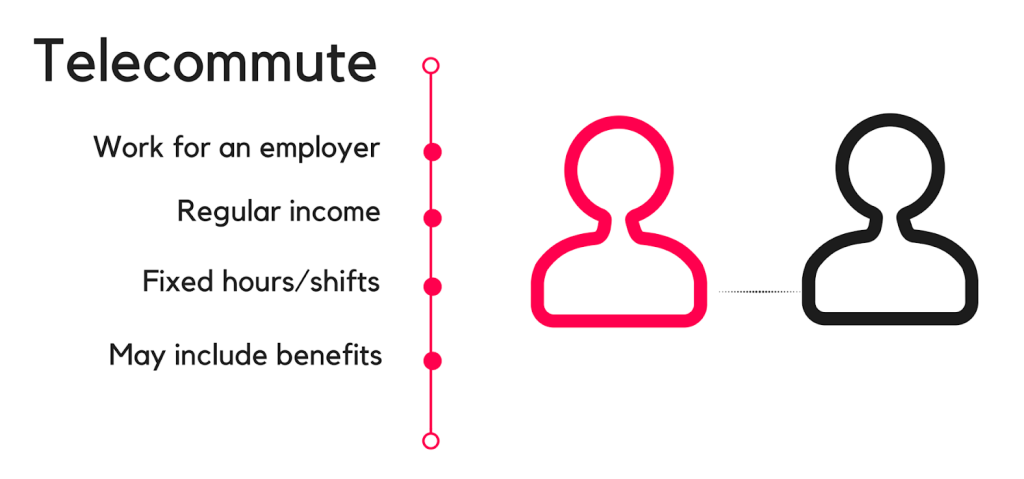
Telecommuting means doing a regular office job from your own home. You still have an employer, get a regular paycheck, and often follow set hours or shifts. It’s different from freelancing or running your own business—more predictable, less entrepreneurial risk. Other terms you’ll see: remote work, home-based employment, or distributed teams.
Many telecommute roles come with the same perks as office jobs: medical insurance, paid holiday, pension contributions. The big shift? No commute, no office politics, work in your pajamas if you want.
What Kinds of Jobs Can You Do Remotely?
The range has exploded as companies realize most “office” work doesn’t need an office. Common categories:
- Customer support/service: Chat, email, phone helpdesk (€15-€30/hour)
- IT & programming: Developers, support techs, QA testers (€40K-€100K+)
- Design: Graphic design, UI/UX, video editing
- Marketing: SEO specialists, social media managers, content strategists
- Writing & editing: Copywriters, technical writers, proofreaders
- Admin & operations: Virtual assistants, project coordinators, data entry
- Sales: Account managers, inside sales (commission-based)
- Professional services: Accounting, legal research, HR coordinators
- Teaching/tutoring: Online instructors, corporate trainers
Even traditionally office-bound roles like analysts, consultants, and managers are going remote. Companies save on office space; you save on commuting costs and time.
Big Companies Hiring Remote Workers
Forward-thinking brands have embraced telecommuting full-time:
- Amazon: Customer service, software development, operations
- Apple & Adobe: Engineering, design, marketing
- IBM & Dell: IT support, sales, project management
- Intuit & Xerox: Accounting software support, admin roles
- American Express & GE: Finance, analytics
- 3M & US Department of Transportation: Engineering, policy roles
FlexJobs publishes an annual Top 100 Companies for Remote Jobs list—worth checking for vetted employers. Larger companies usually offer better benefits (health coverage, 401k matching) than small firms or hourly gigs. Always read the contract: Is it salary + benefits? Hourly only? Paid training? Paid holiday?
Pros and Cons of Telecommuting
Advantages:
- Predictable income—no chasing clients
- Benefits package (health, dental, retirement)
- Clear structure and expectations
- Career progression within the company
- Less startup risk than freelancing/business
Disadvantages:
- Less flexibility than self-employment
- Fixed hours/shifts (e.g., 9-5 or night shifts for global support)
- Job security depends on the company
- Limited to roles the employer offers
- May need specific experience/qualifications
How to Land a Telecommute Job
- Tailor your search: Use keywords like “remote”, “telecommute”, “work from home”, “distributed”, “virtual”.
- Build remote-ready skills: Highlight tools like Zoom, Slack, Trello, Google Workspace on your CV.
- Update LinkedIn: Add “Open to remote work” banner. Network with remote employees.
- Prepare for interviews: Practice “home office setup” questions. Show reliable WiFi, quiet space.
- Start entry-level if needed: Customer service builds remote experience fast.
Best Websites to Find Remote Jobs (2026)
Curated, scam-free sites (most have free tiers):
- FlexJobs.com: Vetted listings, Top 100 Companies list. (€15/month premium)
- WeWorkRemotely.com: Tech, design, marketing focus. Free.
- RemoteOK.io: Global jobs, salary filters. Free.
- Indeed.com: “Remote” filter + location “Anywhere”. Free.
- LinkedIn.com: Follow companies, set job alerts. Free.
- SimplyHired.com: Aggregates listings. Free.
- Remote.co: Job board + remote work guides. Free.
- Rat Race Rebellion: Daily remote job emails. Free signup.
Entry-Level vs Experienced Pay
- Beginner: €12-€25/hour (support, VA, data entry)
- Mid-level: €30-€60/hour (marketing, design, IT)
- Senior: €70K+ salary (management, specialized tech)
Quick Start Action Plan
- Today: Update CV with remote keywords. Apply to 5 jobs.
- This week: Set alerts on 3 sites. Practice mock interviews.
- 30 days: Land interviews. Track applications in a spreadsheet.
Telecommuting offers a stable entry to working from home. It’s not glamorous like entrepreneurship, but it pays bills while you build skills for bigger moves. Perfect if security matters more than total freedom right now.